The Value of Growing Your Own Food

SeniorAdminBlog

When my children were small, I always looked forward to this time of the year when we began planning our garden as a family. I believe that talking to kids about food and how it grows is one of the best ways we can teach our children to have an appreciation and flavour for real food. Real food is found growing on a tree, in the garden, grazing in a field or swimming in the ocean. Real food is not often found in boxes or packages. It is up to us to teach our children how to tell the difference. One of the best ways to teach this important lesson is to grow some food as a family. You don’t even need to have an actual garden plot in the backyard to be able to have your own harvest. Many people grow their produce on balconies or decks in large pots and boxes with much success.

Neat things happen in the dirt. Starting when my children were about three years old, one of their ‘jobs’ was to look for worms as we dug up the soil and prepared it for planting. They were fascinated by worms. We would collect them in pails and watch them wiggle. My boys began learning about the importance of earthworms to the health of our garden and how to be kind to other living creatures. After the worm excavation, the boys would take turns planting the seeds, row by row. Once the planting was finished, the worms were returned to their garden home. Each day after we planted our seeds, there was much anticipation to run out to the garden and check to see if anything had grown yet. Here they began learning about how our seeds needed water and sun to grow. As the plants began to mature and produce tomatoes, peas, and beans, the boys learned what real food tastes like and to value the work that goes into helping plants grow. They also learned patience by discovering what tomatoes taste like when we don’t wait long enough for them to fully ripen!

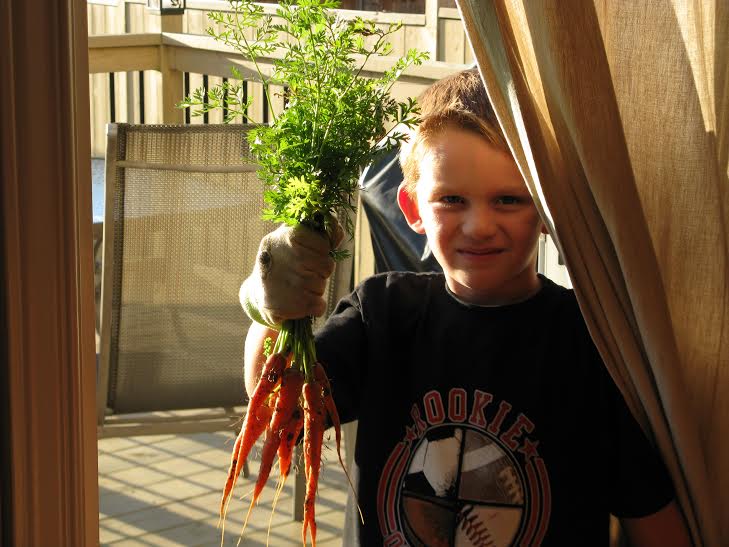
As a mom, I learned that children have a greater capacity for understanding the world around them than I had previously given them credit for. I also learned that my children felt valued when they were able to help. They loved watering the garden independently with their little watering cans or being sent out to the garden to collect carrots for dinner.

I encourage you to give gardening a try with your family. Some of the easiest things to grow are cherry tomatoes, beans, and peas if you are just starting out. The time commitment is minimal and the plants are fairly easy to maintain. Happy gardening!

Ms. Amy

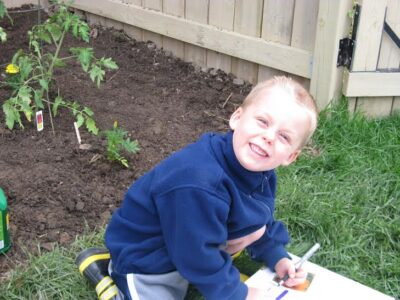
Side note – that sweet boy in the photo is my youngest son who now towers over me. 🙂

Tips for encouraging Life-Long Reading

SeniorAdminBlog

Are you a reader? Do you love sitting down with a good book and getting lost in the story? Or, do you struggle to read, finding it difficult to find something that draws you in?

Children who develop a love for reading early, often find greater academic success & enjoyment throughout their school career as well as go on to enjoy reading throughout their adult lives.

Encouraging a love of books is a gift we can give to our children…even if we struggle with it ourselves.

5 Simple Strategies to Encourage a Love of Reading

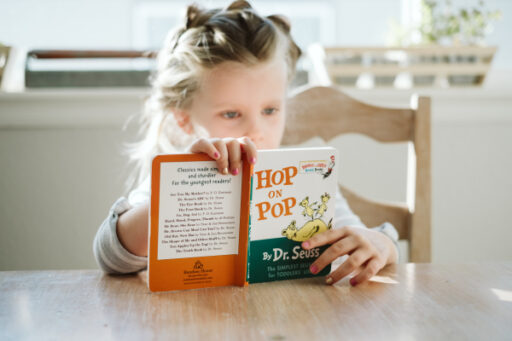
  1. Make reading a daily habit, and not just before bed. Read to your child whenever they show interest in a book. Cuddling on the couch while reading helps connect learning with feelings of warmth, love and security.
  2. Point out print that isn’t found in books. Looking at signs with letters while driving can be a fun family game while in the car.
  3. Make use of our public libraries. Right now is a little more challenging, but curbside pickup is still available. It is wonderful to have your own family library, but taking advantage of our amazing local library inventory might introduce you to new favourite stories as well as save you some money. Click here for more information.
  4. Take your time while reading. Reading isn’t meant to be rushed. Spend a little extra time adding inflection, feeling and yes, even funny voices.
  5. Ask your child questions while reading, such as can they find an item in the picture, what they think might happen, how the characters in the story may be feeling or what they might do in the same situation.

With these simple strategies, you are well on your way to helping your child develop a love of literature as well as gain confidence as they begin to make connections with the alphabet & learn how to read.

Here is to happily ever after in storyland…

Written by Amy Sonnenberg, RECE


Encouraging Adventurous Eaters

SeniorAdminBlog

Encouraging Adventurous Eaters

 I clearly remember thinking that I had successfully raised adventurous eaters by the time both of my children hit 2 years old. They loved sweet potatoes and broccoli, often asking for more. I had also been pretty successful at avoiding refined sugars, artificial food colouring and flavours. I took comfort in the fact that their diet was firmly planted on mostly whole foods. My job as a parent to establish healthy eating habits was complete. Cue laughter here.

And then they turned 3 and began exercising a little more, shall we say, independence? They began refusing some of those nutrient-dense foods and began noticing other foods.

Fast forward to teenagehood and I am feeling pretty good about where we have landed as a family. While my kids do enjoy candy & chips a little more than I would like them too, and I have to remind them to pack veggies and fruit in their school lunches, they are great eaters with a palette for all kinds of flavours. They are adventurous and will try new food experiences pretty willingly. They rarely complain about what is on the table and they know their way around the kitchen.

Believing that many of our healthiest habits begin in the kitchen, I want to pull from my experience as a Mom and Nutritionist and share with you my top 5 tips for raising adventurous eaters. For those of you that don’t know, in addition to thoroughly enjoying spending my mornings with your children, I also have my own family nutrition practice right here in Elmira.

  1. Reluctantly, but believing it was the right thing to do, I allowed my children to try all kinds of things that I may not have encouraged otherwise. I am a firm believer that the more you avoid something, the more shiny and appealing it becomes.
  2. I also remained consistent about offering plenty of whole food options. If they didn’t like something in particular, I thought about different ways to serve the same food. As my son got older, he didn’t like cooked carrots so much anymore. As he was old enough that they didn’t pose much of a choking risk for him, I began serving raw carrots alongside the cooked ones and he ate the raw ones without complaint. Eventually, cooked carrots were a go too.
  3. Keep a routine for snack and meal times. Childhood grazing leads to less eating overall in a day than scheduled eating times. Of course, there is flexibility, but there is value in having a child experience actual hunger. This helps us be able to listen to our bodies and eat when we are hungry and not just bored. Keep in mind that children have small tummies. Aim for 3 meals as well as 2-3 snacks per day.
  4. Try not to sweat it when they refuse to eat certain things. It was not always easy, in fact, there were plenty of times I left the dinner table frustrated and sometimes in tears that my efforts weren’t more appreciated and that we talked about eating a bite of peas more in one meal than anyone should in a lifetime. When a child is small, even getting them to kiss their food goodbye begins a fun interaction. Over time, this can grow to smelling the food, then licking it and then a one bite to be polite policy. All the while, this remains fun and we keep any adult frustration under wraps.
  5. Have fun. Eating food together should be a time to connect, a safe place to talk about the highlights and the crummy parts of our day. When we allow stress around the table, everyone loses and children especially lose their appetite.

Bon appetit!

Written by: Amy Sonnenberg


Outdoor Engagement

SeniorAdminBlog

As I write this article on a snow day it seems appropriate that I am writing about how the outdoors is a perfect place to engage and connect with your toddler and preschool child. Remember snow days as a child? You loved them and couldn’t wait to get your snow pants and mitts on and head out into the wintery unknown. Climbing mountains of newly fallen snow. Is it sticky, snowman, making snow? Or Is it the type of snow that will create a plume as you land in it? With an ever-changing landscape each day, week, month, and season, outdoors bring forth new and exciting opportunities for your child to explore and learn. Stem, creative, fitness and quiet times are right through your door. Let’s bundle up for some outdoor fun.

Older children seem to embrace these days, but younger children may need your participation to get the most of their time outdoor. This also helps us as adults reconnect with our inner child and the natural world around us.

Here are some suggestions that will be fun for both adult and child:

Go for a walk:

I know you have heard it a million times before, but I think walks just for walks are a missed opportunity to explore and play. Play one of the games on the list and see your walk transformed.

I spy (a colour, a shape, a texture):

I spy with my little eye something that is green with a rough texture. Is it a leaf? Is it a tree?
Responses will gauge the type and complexity of questions to ask.
Take turns with your child. Their question may surprise you and take you in an unexpected
direction

Treasure Hunt:

Every time you head out for a walk with a list of items to find it opens your senses. You may think it only opens your eyes while looking for all those items, but we look with our ears and nose too. Ears for hearing the rustle of leaves or a bird chirping in a tree. We smell buds in spring (even if that is a few months off), the smell of pine needles or even some animals. Once the items are found we use touch as we pick up and investigate, nature provides an abundance of textures. Encourage your children to look not taste unless you have expertise in what items found in nature can be eaten.

Follow the Leader:

This is a great way to get in some physical activity. You can guide your child to run, spin, crawl and hop. Go under tree branches and jump to touch a hanging leaf, Climb over a log if they are not too big for your child to get over. Let your child lead and enjoy the activities that their imaginations come up with.

Learn With Backyard Science:

If you joined me on the zoom calls, we had a Stem (Science, Technology, Engineering and Math) activity each week. I am including a few of those in this post because they were so fun but also a new one for you to try.

Exploring Incline and Friction:

Who’s sled will go the fastest?
Gather your items:

  • Ramp – I Made a ramp out of snow. This took a couple days to create as poured water over the ramp to make it solid and slippery.
  • Sleds – Old boxes, egg cartons, plastic wrapping. The other day I found a plastic Easter egg tucked away in my house and as I picked it up I thought what a great sled this would have been.
  • Passengers – Place outdoor safe toys (plastic, bath toys or fast drying) in each sled. I chose to tape them in to stop them from falling out.

Take it outside:
Bring the sleds to the top of the ramp.
Form a hypothesis for your experiment and ask questions. Which sled do they think will go the fastest? Slowest? Why? Talk about some of the things you notice about each sled. The weight, is it heavy or light? The texture, is it smooth or rough?
Test your hypothesis by sending each sled down the ramp. Where you right? Or are you surprised?

Snow Volcanoes:

What happens when you mix baking soda and vinegar?
Gather your items inside:

  • About ½ a cup of baking soda in a plastic cup. I coloured the baking soda with ground-up sidewalk chalk, but food colouring also works.
  • About 2 cups of vinegar. I just brought the whole container out

Take it Outside:
Make a mound/mountain of snow that once built will be big enough to hollow out and place your cup in.
Once your cup is in place, form a hypothesis for your experiment and ask questions. What do you think will happen when I pour the vinegar into the mountain? Do you think the same thing will happen if you pour the vinegar into just plain snow?
Test your hypothesis. Wow, it is fun to watch and learn what does happen, you will be sure to get a lot of cheering and excitement as the mixture bubbles over the side of the mountain.
It was also fun the next day after it froze to pick up the whole frozen mound and place it elsewhere in the garden…hmm, could this be a game of hid and seek as well?

Frozen Bubbles:

Bubbles always capture a child’s attention, and this experiment will do that and bring in a little whimsy to a cold day. This experiment needs to be done on a cold crisp day with minimal wind.
Gather your items inside:

  • Bubble wands, straws, plastic cookie cutters
  • 1.5 cups of warm water
  • ½ cup of liquid dish soap
  • ¼ cup of light corn syrup

Mix everything in a plastic bowl, until it is blended well and all the syrup has dissolved, then refrigerate until chilled.
As you bundle up, form a hypothesis and ask questions. What do you think will happen when we blow a bubble outside? Do you think it will freeze or pop?

Take it outside:
Test your hypothesis and blow the bubbles. How many different ways can you blow the bubbles? Close to the snow or from standing. With the cookie cutter, bubble wand or by dipping the end of the straw in the mixture. Blowing right into the bowl with the straw to see if you get a different result. I am curious already to see what happens.

Your participation in these activities help everyone to get the most out of outdoor time. It can be exciting to watch and learn with your child. It can help them build a love for nature and a foundation for their future education. While helping us, adults, to reconnect to the environment and create life-long memories with the most important people in our lives.

By Jennifer Wall

Curating Family Traditions

SeniorAdminBlog

February is a great time to talk about family traditions with Valentine’s Day and Family Day right around the corner. Family traditions connect us, give us something to look forward to and can even be used to reinforce our values. Sometimes though, it is hard to know where to begin when curating your own family traditions.

In our home, some traditions are well defined – like getting to open your stocking on Christmas morning before breakfast, while others largely go unspoken but are somehow known like Friday night family movie night.

One of the fond memories that my children still talk about from when they were small are birthday balloons. On the morning of their birthdays, my boys would come into the living room to a whole bunch of balloons either hanging from the ceiling or in a big pile to play in. The first time we did this for our children, we really didn’t think about it becoming a tradition. When the kids were getting excited the following year about their birthdays, balloons came up in conversation multiple times and we knew it had stuck.

Over the years our traditions have evolved. Some traditions are really special when children are small and others are grown out of. Both kinds of traditions are equally important. For example, the birthday balloons aren’t as important as they once were, but a birthday decorations is a must in our dining area.

The key to coming up with your own traditions is to keep it simple & have fun! See below for a few ideas.

Fun Family Tradition Ideas:

  • bedtime story
  • date time with Mommy or Daddy
  • a new book every birthday
  • Friday movie night
  • weekly games night
  • ice cream sundae party on the last day of school before summer break
  • the red plate

What is the red plate about? The idea behind this tradition is to honour someone’s special milestone or achievement around the dinner table by having them use a special red plate that is saved for this very purpose.

Our red plate has helped us celebrate new jobs, promotions, birthdays, report cards and retirements. In a world that at times is so fast-paced, we sometimes forget to take a moment and pause and acknowledge each other’s exciting news. The red plate tradition takes very little effort and yet the feeling you get when you are the one using it is quite significant. The red plate tradition has become one of my favourite items to gift. This is the little poem that I include with the plate.

Red Plate

May today be one of many red letter days
Times you’ll remember in so many ways
This gift is a tradition for you to start
A gift of love, straight from the heart
On days that are special that you’ll want to recall
Set out the red plate to celebrate it all
Honour the person and their great feat
On this special plate, let them joyously eat
It may be a birthday, promotion or good grade
A Little League win or a wise choice that was made
May your years together as husband and wife
Bring you countless special days throughout your life
This wonderful times will come and go
Keep the red plate at the ready as your blessings flow

Author Unknown

Here is to you creating your own special traditions with your families!


Ms. Amy


Valentine Photo by Clem Onojeghuo on Unsplash